Home
The European Forum for Democracy and Solidarity was founded in January 1993 by the social democratic parties and political foundations from EU countries. The European Forum is dedicated to support the transformation and democratisation processes in Central, Eastern and South Eastern Europe. By serving as a platform for co-operation between social democratic parties, organisations and personalities it aims to contribute to the development of (social-) democracy. Within the European Forum 12 social democratic foundations and 20 social democratic parties play an active role.
News
Leader Yabloko resigns
Tue 24 Jun 2008
During the Yabloko party congress on 21 June, Grigori Yavlinski (56) resigned as leader of the liberal opposition party. Yavlinski was the leader of Yabloko for fifteen year and in the early 1990s played an important role by the development of a market economy in Russia. However, critique on Yavlinski grew within the party after Yabloko failed to gain representation in the Duma in the latest parliamentary elections in 2003 and 2007. After the failed elections of December 2007, there were increasing calls for his resignation. Yavlinski will be succeeded as party leader by Sergey Mitrochin, leader of the Moscow branch of Yabloko. With the election of Mitrochin, Yabloko seems to have chosen for the moderate wing of the party as opposed to the more radical wing, which is led, amongst others, by Yabloko St. Petersburg leader Maksim Reznik. [more] |
Macedonia: Party of prime minister wins elections marred by violence
Mon 02 Jun 2008
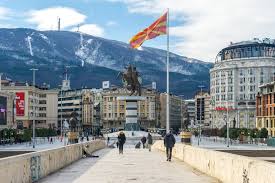
Preliminary results show the centre-right VMRO-DPMNE coalition led by Prime Minister Nikola Grueski has won most votes in the Macedonian parliamentary elections held on 1 June. According to the results, published after 97 percent of the votes were counted, the VMRO-DPMNE coalition won 48.21 percent of the votes. This could mean that the coalition will receive a majority of the parliament’s 120 seats. The “Sun – Coalition for Europe” block led by the Social-Democratic Alliance of Macedonia is trailing behind with 23.19 percent of the vote. The country’s two ethnic Albanian parties also managed to secure representation: the Democratic Union for Integration (DUI) won 11.23 percent of the vote, while rival Democratic Party of Albanians (DPA) won 10.33 percent. [more] |
Georgia Elects Its Parliament
Mon 26 May 2008
On 23 May the Georgian Central Election Committee released its data regarding the May 21st Georgian Parliamentary Elections, stating that the results are not expected to change. [more] |
Country Updates
Montenegro
(last update: Tue 17 Jun 2008)Montenegro’s politics and population has long divided over the question whether Montenegro should stay in one state with Serbia or not. The establishment of Serbia and Montenegro in February 2003 led to political instability and a call for early elections. However, in a referendum on 21 May 2006, the majority of the Montenegrin population declared to be in favour of independence. Montenegro now is an autonomous state. Montenegro’s first parliamentary and presidential elections as an independent state did not bring any big political changes. Still, a coalition of the Democratic Party of Socialists (DPS) and the Social Democratic Party (SDP) is the major force in government. Filip Vujanovic (DPS) was elected president for a second term. On 1 December 2006, the EU and the government of Montenegro finalised the technical negotiations on the Stabilisation and Association Agreement (SAA), which was signed on 15 October 2007
Armenia Update
(last update: Wed 28 May 2008)“Another major step towards democracy”, that’s what president Robert Kocharian of Armenia said about the general elections in Armenia on 12 May 2007. The elections, which brought a victory to the pro-government parties, were assessed by the Organization for Security and Cooperation in Europe / Office for Democratic Institutions and Human Rights (OSCE/ODIHR) election observation mission as being largely in accordance with international standards, although some issues remained. It was hopefully proclaimed that the elections could be seen as a further step to democratization of the country. The 19 February 2008 presidential elections shed a darker light on democratization processes in Armenia, however. After a campaign period marked with incidents, presidential candidate and then prime minister Serzh Sargsyan was proclaimed the winner within a single round. The opposition, led by former president Levon Ter-Petrossian, protested these results, claiming widespread election fraud had taken place. After the opposition staged protest rallies in the Armenian capital of Yerevan that lasted for over a week, the police violently dispersed the demonstrations, and a stage of emergency was proclaimed which was used by the government to curb down political liberties in Armenia. The international community also protested the authorities’ conduct in the event. Meanwhile, the unrest is again under control, and Serzh Sargsyan has been inaugurated as Armenia’s president. Part of the political opposition gave up their struggle and concluded deals with the new president. Supporters of Levan Ter-Petrossian, though, still fight the results of the elections. The political situation in Armenia might seem calm again, but is not yet stable.
Morocco Update
(last update: Thu 08 May 2008)The parliamentary elections of September 2007 were the most democratic and orderly ran elections in the history of Morocco, analysts stated afterwards. The government and the parties had put much effort in the election campaign in order to make the Moroccan electorate enthusiastic for the coming elections. However, the turnout of only 37% on the election day was a huge disappointment.
Activities
Energy & Environment policy: between power politics and alternative power sources
Sat 01 Dec 2007
On 1 December 2007, the European Forum organized a conference on 'Energy & Environment policy: between power politics and alternative power sources' in Kyiv, Ukraine. The conference focused on two interlinked challenges for Europe: energy security and climate change. The PES resolution of December 2006 stated that it is high time to commit to ambitious targets regarding energy and climate, since high energy prices and the evident consequences of the changing climate underline the urgency of a new energy strategy for Europe and the planet. This conference aimed to facilitate setting the social democratic energy and climate agenda.
European Neighbourhood Policy at Work
Tue 27 Nov 2007
The parliamentary elections of September 2007 were the most democratic and orderly ran elections in the history of Morocco, analysts stated afterwards. The government and the parties had put much effort in the election campaign in order to make the Moroccan electorate enthusiastic for the coming elections. However, the turnout of only 37% on the election day was a huge disappointment. During the 1990s and since King Mohamed VI came to power, following his father’s death in 1999, the democratic perspectives for the future of the Kingdom of Morocco improved. Already, gradual political reforms in the 1990s resulted in the establishment of a bicameral legislature in 1997. Parliamentary elections were held for the second time in September 2002. The elections of 2007 could be seen, despite the low turnout, as a new step towards full democracy now the leader of the biggest party in parliament, Abbas El Fassi of the Istiqlal-party, has been appointed by the King as Prime Minister of the new government. Morocco however still has a number of human rights’ issues to resolve, and the international border issue with the Polisario Front over the territory of Western Sahara remains unsettled. Since the accession of Spain to the European Economic Community (now EU) in 1986, Morocco is one of the neighbours of the EU. To strengthen the relationship with these neighbours, the EU signed the Association Agreement with Morocco in 1996 and has developed (since March 2003) the European Neighbourhood Policy, in which Morocco participates. The European Forum has been organising Wider Europe conferences in Ukraine in 2003, in Moldova in 2004, in Georgia in 2005 and in Russia in 2006. This is the first conference to focus on the Southern Dimension of the European Neighbourhood Policy.